
How Secure Receipts Build Trust During Small Business Audits

The Shifting Demands of Financial Accountability
The landscape of business compliance is becoming more complex. As of 2024, a significant shift occurred when the U.S. Financial Crimes Enforcement Network (FinCEN) began requiring many small businesses to report beneficial ownership information. As detailed in FinCEN’s official compliance guide, this signals a new era of regulatory scrutiny. For businesses managing cross-border operations and multi-currency transactions, this environment demands more than just basic record-keeping. It requires verifiable proof of financial integrity.
We’ve all seen the shoebox full of faded paper receipts or the messy desktop folder of random scans. These traditional methods are simply no longer adequate. They are vulnerable to loss, damage, and tampering, creating significant risks during an audit. This is where encrypted receipt uploads become the foundation for robust small business audit compliance, providing the verifiable and secure documentation that modern accountability requires.
Vulnerabilities in Unsecured Receipt Handling
Relying on unsecured financial documentation is a direct liability waiting to happen. It’s not a matter of if something will go wrong, but when. The risks are not abstract; they are tangible threats that can disrupt operations, invite legal trouble, and erode trust with auditors. For any business owner, understanding these specific vulnerabilities is the first step toward protecting your company.
- Physical and Digital Loss: A simple office fire, a burst pipe, or an accidental click of the delete button can wipe out months of critical financial records. Without secure, redundant backups, these documents are gone forever, leaving massive gaps in your audit trail.
- Data Tampering and Fraud: We all know how easy it is to alter a standard PDF or JPEG file. An unsecured digital receipt can be modified with little effort, which can invalidate an entire financial record. During an audit, even the suspicion of tampering can raise serious legal red flags.
- Privacy and Compliance Breaches: Receipts often contain sensitive information, from customer details to employee data. Storing these insecurely can lead to a data breach, potentially violating regulations like GDPR and resulting in heavy fines.
– Operational Inefficiency: Picture an auditor spending days manually sifting through disorganised paper receipts or trying to make sense of inconsistently named digital files. This painstaking process is not only slow but also drives up audit costs significantly.
The Mechanics of Encrypted Receipt Security
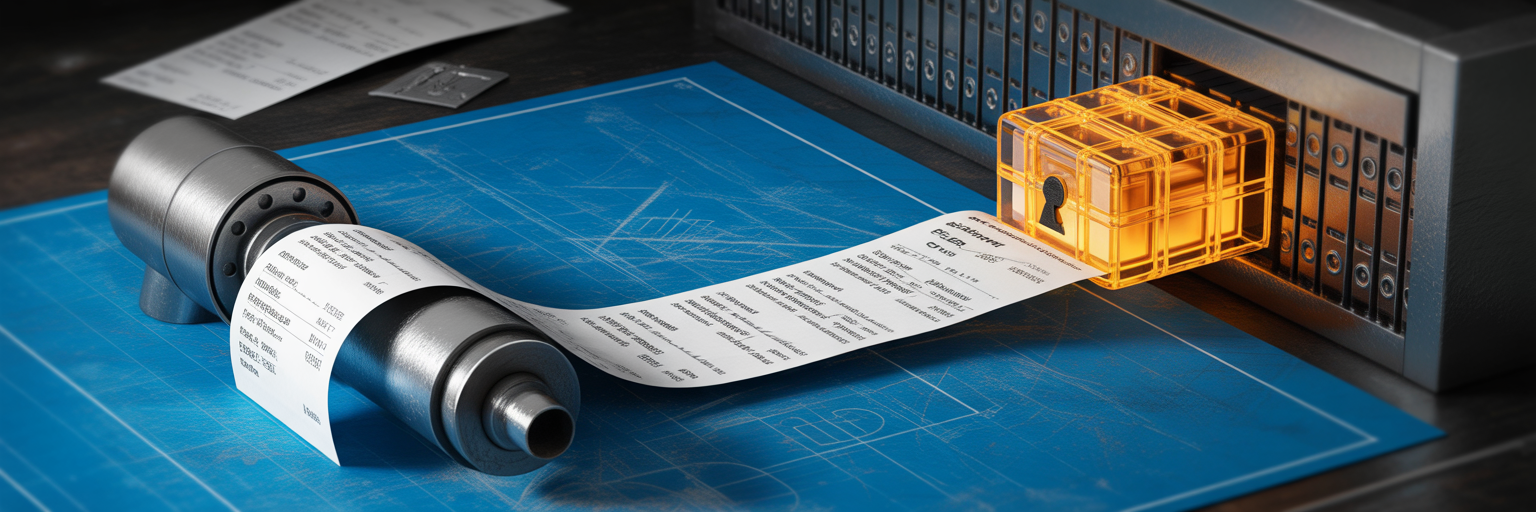
So, how does encryption solve these problems? Think of it as placing each receipt into a sealed, tamper-proof digital container the moment it is created. This process makes the information unreadable to anyone without the proper key. Technologies like PGP (Pretty Good Privacy) are central to this, transforming sensitive data into scrambled text that is useless to unauthorised parties. As technical documentation from sources like Oracle explains, these configurations are vital for business security.
But encryption is only part of the solution for complete digital receipt security for audits. Secure transmission protocols like HTTPS ensure the “digital container” is delivered safely without interception. At the same time, digital signatures act like a unique fingerprint, proving the document came from a verified source and has not been altered since it was signed. This combination creates an immutable record that auditors can trust implicitly.
Modern platforms also use secure tracking technologies to log every interaction with a document, creating a verifiable chain of custody that shows who accessed what and when. This level of detail is precisely what auditors need. A well-designed system for secure financial documentation, such as our platform, automates this entire process, making high-level security accessible without requiring you to become a cryptography expert.
Creating a Transparent and Efficient Audit Trail
The real value of this technology becomes clear during an audit. Instead of a stressful, drawn-out process, encrypted receipts help improve audit transparency and efficiency from day one. Auditors no longer have to question the authenticity of every document. They are provided with immediate, verifiable proof, which transforms the entire dynamic. The old, manual process of chasing down paperwork is replaced by a streamlined digital workflow that saves time and reduces frustration for everyone involved.
This shift is best understood by comparing the two approaches directly.
| Audit Task | Traditional Method (Paper/Unsecured Files) | Encrypted Digital Method |
|---|---|---|
| Document Verification | Manual inspection of each receipt; cross-referencing with ledgers | Instant verification via digital signatures and timestamps |
| Authenticity Check | High potential for questioning; difficult to prove originality | Cryptographically guaranteed authenticity; immutable record |
| Time Required | Days or weeks of manual sorting and review | Hours or minutes for automated checks |
| Auditor Confidence | Moderate to low; relies on trust and manual checks | High; based on verifiable, tamper-proof data |
Note: This table contrasts the typical workflow and outcomes for auditors when dealing with traditional, unsecured documentation versus a system built on encrypted, verifiable digital receipts.
By removing the friction and doubt associated with manual verification, you foster a more collaborative relationship with your auditor. They can complete their work faster and with greater confidence, which ultimately leads to a smoother, quicker audit and a stronger compliance posture for your business.
Navigating Cross-Border Compliance and Data Privacy

For businesses operating internationally, the stakes are even higher. Adhering to a patchwork of global data protection laws, such as GDPR in Europe, can feel overwhelming. Encryption is not just a good practice in this context; it is a critical technical measure for demonstrating compliance. When receipts contain personal data, encrypting them is a fundamental step in protecting that information and avoiding significant fines.
Another common headache is managing multi-currency receipts from different countries, each with its own format. A unified system that encrypts and standardises these diverse data formats is essential for maintaining a clean and compliant financial record. By implementing proactive encrypted receipt management, you turn compliance from a reactive burden into a strategic advantage. It allows you to operate with confidence in a global market, knowing your financial data is secure and defensible. A platform like the one we’ve built is designed to handle these complexities seamlessly.
Building Future-Proof Financial Integrity
Adopting secure documentation practices is about preparing your business for the future. As financial regulations continue to tighten, having a system that guarantees the integrity of your records is no longer optional. The benefits are clear and directly address the most pressing concerns for any growing business.
- Ironclad Security: You gain robust protection against fraud, tampering, and accidental data loss, securing your financial history.
- Audit Efficiency: The time, cost, and friction associated with audits are drastically reduced, freeing you to focus on your business.
- Stronger Compliance: You build a defensible framework for navigating complex regulations at home and abroad.
Fortunately, automated financial platforms are making this technology more accessible than ever. Adopting a system for encrypted receipt management should not be viewed as an operational cost. It is a strategic investment in building long-term trust with regulators, investors, and partners. For any small business aiming for sustainable growth, embracing secure documentation through a solution like ours is essential for building true financial resilience.
